1,000 inovasi dalam 20 tahun
 MEMANG diakui, untuk cemerlang dalam apa-apa bidang sekali pun, ia perlu bermula dengan rasa cinta dan minat yang mendalam. Namun, ia tidak bermakna kita tidak boleh berjaya dalam bidang yang diluar minat kita kerana perasaan itu boleh dipupuk dan disertakan pula dengan kesungguhan. Begitulah serba ringkas yang boleh dis-impulkan daripada pesanan Zulkifli Haron, nama yang tidak asing lagi dalam dunia reka cipta di negara ini. Meskipun dia agak bertuah kerana sememangnya dilahirkan dengan bakat, kreativiti dan imaginasi untuk mereka cipta namun ujarnya,ia bukanlah alasan bagi mereka yang tidak dilahirkan dengan kelebihan itu untuk tidak langsung mencuba. Malah katanya, minat dan kemahiran itu boleh dipupuk sejak masih kecil lagi lebih-lebih lagi ketika di bangku sekolah sekaligus menyemai budaya berfikir secara kreatif dan inovatif di kalangan kanak-kanak seterusnya membudayakannya.
Berkunjung ke bengkel anak kelahiran Palekbang, Kelantan ini yang terletak di Rawang, Selangor baru-baru ini, menjelaskan keadaan sebenar mengapa dia begitu menggalakkan budaya merekacipta di kalangan masyarakat tempatan. Pertamanya kerana sekian banyak teknologi yang boleh dibangunkan bagi menyokong kepada keperluan dalam negara lebih-lebih lagi untuk sektor pembuatan berasaskan industri desa. "Bagi sektor ini, kita tidak memiliki banyak pilihan kepada teknologi luar kerana industri desa ini hanya berkaitan dengan masyarakat tempatan dan hanya 'orang kita' yang boleh membangunkan teknologi berkaitannya," ujar beliau sekali gus menjelaskan mengapa tumpuan penyelidikannya lebih kepada penciptaan teknologi untuk industri berkenaan.
Keduanya tambah Zulkifli, generasi sekarang sangat beruntung kerana mereka mempunyai kelebihan lebih-lebih lagi daripada sudut pendidikan untuk mencambah minat terhadap budaya mereka cipta seterusnya bergelar pereka. Itu belum lagi dikira dengan peluang yang dibuka oleh kerajaan untuk mempamerkan kreativiti rekaan masing-masing misalnya menerusi Pertandingan RekaBentuk Pereka Muda atau program pertukaran pelajar ke Jepun yang tidak seharusnya dilepaskan begitu sahaja. Sekadar berkongsi pengalamannya bergelar pereka cipta yang mungkin boleh dijadikan dorongan kepada mereka di luar sana untuk mengikuti jejak langkahnya, Zulkifli berkata, sikap tidak mudah putus asa merupakan asas utama yang perlu ada di dalam diri mereka yang bercita-cita untuk terjun ke dunia reka cipta. Ini kerana tambahnya, sesebuah teknologi yang dibangunkan tidak akan berhasil dalam masa yang singkat sebaliknya memerlukan tempoh yang panjang sekali gus turut menguji kesabaran.

la juga perlu melalui beberapa peringkat percubaan malah ada reka cipta yang dibangunkannya tidak berjaya dan disinilah sikap tidak berputus asa itu memainkan peranan seterusnya memastikan rekaan itu berhasil. Sikap yang sama turut mendorong Zulkifli selama hampir 20 tahun menjadi pereka cipta dengan lebih 1,000 rekaan telah berjaya dibangunkannya sehingga kini. la termasuk kira-kira 200 reka cipta khusus untuk meningkatkan produktiviti serta pendapatan pengusaha industri desa di seluruh negara yang dibangunkan di bawah syarikat miliknya iaitu Zull Design Autotronik. Sedikit nasihat kepada generasi muda Zulkifli berkata, tidak salahnya untuk menanam cita-cita bergelar seorang pereka cipta kerana kerjaya itu juga sama pentingnya seperti seorang doktor, peguam dan sebagainya. Ini kerana seorang pereka cipta turut menyumbang kepada kesejahteraan masyarakat menerusi reka cipta mereka yang digunakan untuk meneruskan sebuah kehidupan yang lebih baik. Pulangan kepada seorang pereka cipta juga adalah sesuatu yang cukup berbaloi bukan hanya dari sudut ekonomi malah, lebih utama kepuasan diri sendiri apabila melihat hasil kreativiti dan inovasi itu dikomersialkan. "Pereka cipta muda juga perlu menyemai di dalam fikiran mereka bahawa setiap rekaan yang dibangunkan bukan hanya untuk kepentingan peribadi atau berpandu-kan keuntungan semata-mata sebaliknya idea kreatif dan inovatif itu perlu dikongsi dengan orang ramai," ujarnya.
Mesin membuat bubur caca.
Mesin ini direkacipta menggunakan kaedah pneumatik bagi menekan tepung ke dalam acuan untuk yang akan membentuk bubur caca. Kelajuan mesinnya dikawal menggunakan suis dan penentu masa manakala Teflon digunakan bagi memotong tepung mengikut saiz tertentu dan untuk menolak tepung ke dalam bekas.
la direka menggunakan material yang murah dan mudah didapati seperti besi, pneumatik, kapasitor, tali nilon, aluminium, pemampat udara dan Teflon.
Kelebihan utama mesin ini ialah ia begitu mudah dikendalikan serta menjimatkan masa, tenaga dan kos. Di samping itu, pengguna juga dapat menentukan dengan tepat saiz tepung yang diinginkan dengan mengawal menggunakan pneumatik.
Mesin pelbagai isian.
Mesin ini melakukan proses pengisian air secara konsisten dari sudut isipadu secara automatik, cepat dan teratur yang dilaraskan dengan memprogram PLC.
Pengguna dapat melaraskan isipadu air di dalam botol mengikut kehendak mereka. la juga menjimatkan kos, masa dan tenaga dengan pengendalian yang efisien yang mana mesin ini mampu mengisi 10 botol dalam masa satu minit.
Mesin Mepek.
Mesin ini merupakan mesin aneka kuih yang mana ia boleh digunakan untuk membuat kuih tat, laksa, putu mayam, keropok lekor, maruku dan pelbagai lagi. Pengguna hanya perlu memasukkan adunan kuih ke dalam mesin ini dan ia membentuk jenis-jenis kuih yang diingin dengan mudah dan pantas.
la menggunakan kaedah penumatik untuk menekan adunan ke acuan bagi membentuk pelbagai jenis kuih. Di kawal menggunakan suis dan penentu masa, mesin inijuga menggunakan pemutra (roller) untuk memudahkan pergerakan adunan kuih yang keluar dari acuan mesin. Kelebihan utama mesin mepek adalah menjimatkan masa, kos dan tenaga serta mudah dikendalikan. la juga dapat menghasilkan kuih mengikut kehendak pengguna serta dalam saiz yang sama.
Mesin kuih samprit automatik
Mesin ini menggunakan pemampat udara dan inverter kawalan kelajuan untuk beroperasi. Pengguna akan memasukkan adunan kuih samprit ke dalam salah satu bahagian mesin ini sebelum bentuk kuih samprit yang sama saiz dihasilkan di atas alas kuih. Mesin ini dikawal sepenuhnya secara automatik sekali gus memudahkan kerja-kerja menghasilkan kuih samprit di samping menjimatkan kos dan masa pengguna.
Pengeluaran kuih samprit juga adalah dalam jumlah yang konsisten serta menjamin kualiti dan kuantiti permintaan pembeli. la menggunakan material seperti pneumatik, plywood pengalas kuih, rantai, peng-gulung mini dan kawalan PLC.


Ops Tulen 2007 @ Sikap Tulen
 BAHAGIAN PENGUATKUASA
KEMENTERIAN PERDAGANGAN DALAM NEGERI DAN HAL EHWAL PENGGUNA
LOT
62623 PUTRAJAYA
TEL: 603-8882550
FAX: 603-88826171 - Pengurusan Am, 603-88826081 – Bekalan, 603-88826082 – Harga, 603-88826134 – Pelesenan, 603-88826136 - Harta Intelek, 603-88826126-Aduan
Ops Tulen 2007 @ Sikap Tulen Tanggungjawab Profesional Berlesen
Sukacita saya merujuk kepada perkara di atas,
Adalah dimaklumkan bahawa Kementerian Perdagangan Dalam Negeri dan Hal-Ehwal Pengguna sedang mempertingkatkan aktiviti-aktivrti penguatkuasaan terhadap penggunaan perisian komputer secara tidak sah oleh sektor profesional.
2. la merupakan suatu kesalahan di bawah Seksyen 41 Akta Hakcipta 1987, bagi pemilik tunggal/pekongsian/badan korporat yang menggunakan salinan langgaran (cetak rompak) perisian komputer bagi tujuan komersil. Jika disabit kesalahan, pihak tertuduh boleh didenda sekurang-kurangnya RM2,000 sehingga RM20,000 untuk setiap salinan langgaran dan/atau penjara sehingga 5 tahun. Tambahan lagi, dalam keadaan tertentu, seorang profesional berlesen mungkin akan kehilangan kelayakan untuk menjalankan praktisnya.
4. Berikutan ini, Kementerian ini dengan kerjasama Business Software Alliance (BSA) ingin menasihatkan pihak tuan supaya memastikan hanya perisian kompuler yang sah digunakan dengan menjalankan suatu odit ke atas kesemua komputer-komputer dalam organisasi pihak tuan dan menentukan perisian komputer didalamnya adalah sah.
5. Saya berharap pihak tuan akan memberikan pertimbangan yang serius terhadap perkara ini, Pihak tuan boleh menghubungi pihak BSA melalui Talian Bebas 1-800-887-800 atau www.bsa.orq/malaysia untuk maklumat pengurusan aset perisian komputer (software asset management) untuk menentukan perisian komputer pihak tuan adalah sah, atau jika pihak tuan mempunyai apa pertanyaan. Kerjasama pihak tuan amat dihargai dalam bersama-sama membanteras aktiviti-aktiviti cetak rompak perisian komputer.
Sekian dan terima kasih. "Berkhidmat Untuk Negara"
Saya yang menurut perintah,
(ISKANDAR HALIM BIN HAJI SULAIMAN)
Timbalan Ketua Pengarah Penguatkuasa
Bahagian Penguatkuasa Kementerian Perdagangan Dalam Negeri
Dan Hal Ehwal Pengguna
Menghalang nyamuk, segala jenis serangga berkaki enam, pacat dan lintah

“NATURAL BODY STICK”
“Natural Body Stick” - Ianya direka dengan formulasi yang tidak berminyak, senang disapukan, untuk menghalang nyamuk, segala jenis serangga berkaki enam, pacat dan lintah dari mendekati pengguna. Kandungannya dirumus khusus untuk menjaga kesihatan kulit. Ia tidak meninggalkan kesan pada pakaian anda. Sesuai digunakan oleh orang awam, anggota beruniform, pelatih PLKN, kem-kem bina semangat dan yang terlibat dengan aktiviti-aktiviti luar serta hutan. Tahan lama, bergantung kepada kekerapan guna, jika digunakan setiap hari, ianya boleh digunakan sehingga sebulan. Harga sebotol RM 15 untuk 40 gm.
 “BODY & FOOT TALC”
“Body & Foot Talc” - Ianya direka untuk menyerap bau dan lembapan pada badan dan kaki. Lembut, halus dan senang untuk digunakan. Peluh yang terhasil mengandungi bakteria dan funggi / kulat, menyebabkan anggota badan berasa gatal; menghasilkan metabolisma mikrob yang mengeluarkan toksin dan menyebabkan ianya berbau. Sesuai digunakan oleh orang awam, anggota beruniform, pelatih PLKN, kem-kem bina semangat dan yang terlibat dengan aktiviti-aktiviti luar. Harga untuk sebotol “Natural Body Stick” adalah RM 8 untuk 75 gm.
Suku Kaum Orang Asli
Orang-orang Senoi mendiami lereng Titiwangsa iaitu di pedalaman Negeri Perak, Kelantan dan Pahang. Terdapat 6 suku kaum di dalam rumpun bangsa Senoi iaitu Che Wong, Mahmeri, Jahut, Semoq Beri, Semai dan Temiar
A. Temiar
Pemilihan penempatan Suku Bangsa Temiar di sesuatu tempat ditentukan oleh Penghulu. Ini dilakukan dengan cara 'Berhalaq' (jampi) atau mimpi. Tempat yang hendak didiami jauh dari tanah perkuburan, bebas daripada adanya kayu keras seperti 'merbau' dan sebagainya.
Mereka juga tidak membuat penempatan di kawasan berpaya (takungan air) kerana ditakuti berpenunggu. Begitu juga kawasan air terjun dan sungai besar juga tidak sesuai kerana ditakuti ada puteri sungai/lata yang akan mengganggu.
Mereka membina rumah daripada kayu (selain daripada kayu jenis keras) secara bergotong- royong. Di peringkat awal petempatan, mereka membina rumah panjang. Setelah beberapa lama tinggal di rumah panjang terebut, barulah mereka berpindah dengan keluarga masing-masing dan membina rumah sendiri.
Mereka menyara keluarga dengan bercucuk tanam, berburu dan mencari tumbuh-tumbuhan hutan.
B. Semoi
Suku kaum Semai tinggal bertaburan di kawasan Banjaran Titiwangsa, meliputi Perak Tengah, Perak Selatan dan Pahang Barat. Bancian pada tahun 1993 menunjukkan jumlah mereka telah meningkat lebih daripada 42,000 orang dan merupakan suku kaum Orang Asli yang terbesar jumlahnya. Mereka hidup bermasyarakat. Sebuah kampung biasanya terdapat di antara 60 hingga 300 penduduk yang diketuai oleh seorang Penghulu atau Batin yang dilantik dari golongan berpengaruh seperti pawang, bomoh dan ketua adat.
C. Semoq Beri
Orang Semoq Beri tinggal di kawasan pinggir Pahang dan Terengganu. Satu ketika dahulu Orang Semoq Beri berpindah randah mencari tempat yang sesuai untuk mencari bahan-bahan makanan. Semenjak kerajaan memberi penumpuan untuk meningkatkan ekonomi rakyat, kini Orang Semoq Beri sudah mula mengubah cara kehidupan mereka agar setanding dengan masyarakat umum.
Di negeri Pahang terdapat terdapat 5 buah kampung di Jerantut yang berjumlah 95 keluarga seramai 735 orang. Daerah Maran berjumlah 5 buah kampung terdiri 197 keluarga seramai 935 orang dan daerah Kuantan terdapat 2 buah kampung berjumlah 67 kelamin seramai 366 orang. Di negeri Terengganu terdapat terdapat 1 buah kampung di Hulu Terengganu yang berjumlah 42 keluarga seramai 185 orang. Daerah Kemaman berjumlah 2 buah kampung terdiri 69 keluarga seramai 284 orang.
 D. Jahut
Suku Bangsa Jahut terdapat di daerah Temerloh dan Jerantut di Negeri Pahang. Di daerah Temerloh mereka tinggal di kawasan-kawasan yang dipanggil Kerdau-Paya Paleng, Paya Mengkuang, Kuala Krau - Penderas, Mendoi, Seboi, Pasu, Piau dan Galong. Di daerah Jerantut mereka tinggal di Sungai Kiol dan Kekwel (Kol). Mereka menyara hidup dengan mencari rotan dan damar untuk dijual, di samping menangkap ikan, memburu binatang dan berladang dengan menanam padi huma, jagung dan ubi.
E. Mah Meri
Mah Meri bermakna "Orang Hutan" sementara dalam istilah bahawa Mah Meri disebut "bersisik". Mereka juga dikenali sebagai orang laut kerana mereka tinggal berhampiran dengan laut dan bekerja sebagai nelayan. Tidak ada bukti sejarah yang tepat ditentang asal-usul mereka, walau bagaimanapun mereka ini dipercayai berhijrah dari pulau-pulau di selatan Johor ke pantai negeri Selangor kerana lari dari musuh.
Kini masyarakat Mah Meri telah mengalami perubahan dari segi pemikiran dan pembangunan hasil dari percampuran dengan masyarakat lain.
F. Che Wong
Orang Che Wong tinggal kawasan pinggir di daerah Raub dan Temerloh, Pahang. Satu ketika dahulu Orang Che Wong suka berpindah randah mencari tempat yang sesuai untuk mencari bahan-bahan makanan. Semenjak kerajaan memberi penumpuan untuk memberi kesejaheraan kepada rakyat kini Orang Che Wong sudah ada kampung halaman mereka untuk mengubah cara kehidupan mereka agar setanding dengan masyarakat umum.
Daerah Raub terdapat 4 buah perkampungan dan daerah Jerantut 1 buah perkampungan Orang Che Wong yang berjumlah keseluruhannya 68 keluarga seramai 417 orang.

Kota Kinabalu, the capital of "The Land Below The Wind," is a lively city with a melting pot of cultures.
To get an idea of the size and shape of Kota Kinabalu, the best view of the city would probably be from your seat on the plane.
If you have the chance, sit on the right side of the aircraft - you will receive a breathtaking aerial view Kota Kinabalu just before landing; such is the proximity of the airport to the city centre.
Numerous resorts group beside the city, and modern centres are fast spreading.
In the horizon, the majestic outline of the Kinabalu Mountain, Southeast Asia's highest peak, is visible - it stands above 4,000 m. City, resorts and mountains - all three elements are found in Kota Kinabalu.
List of the TOP 5 BEST free POP3 & SMTP Email providers
 Why only five listings? Because we want to list only the best free email services on the web which we tested ourselves. Besides, even the listed TOP 5 email services are already four more than one really needs :-)
All listed free email providers offer as a minimum free POP3 and SMTP services which means you can receive and send email with your favorite email software (like Microsoft Outlook Express, Eudora, Netscape Email and many others).
©2007 iOpus GmbH, Patents Pending
©2007 iOpus GmbH, Patents Pending
Malaysia-US FTA negotiations hit turbulence
| The fourth round of negotiations for a US-Malaysia Free Trade Agreement is currently in progress in San Francisco, but Malaysians have no idea what they are getting themselves into, warns Anil Netto. Disagreements have surfaced in the third round of negotiations in November for a Free Trade Agreement (FTA) between Malaysia and the United States. This has provided a glimmer of hope for a civil society coalition that has been actively campaigning against the FTA for fear that it could be damaging to Malaysia’s economic sovereignty and to the interests of workers, the poor and the marginalised. - © 2007 Aliran |
Let's promote Malaysia, truly asia!

Malaysia is truly a fascinating tourist destination endowed with stunning scenery, a colorful multi-racial mix and a charming blend of the old and new. In addition, an exciting year-round calendar of world class and unique local events, ensure visitors have endless opportunities to enjoy nature-based adventures, enriching cultural experience or fabulous shopping sprees.
Federal Land Development Authority (FELDA)

Federal Land Development Authority (FELDA) was established on 1st July 1956 under the Land Development Act 1956. The Authority is managed by a board responsible to the Deputy Prime Minister.
Federal Land Development Authority, better known as FELDA is the foremost land development agency in Malaysia. FELDA was established on 1st July 1956 under the Land Development Act 1956 as a result of recommendation of Government Working Committee.
FELDA was established with the purpose to help the government carried out rural land development schemes and to uplift the economic status as well as living standard of the rural community.
Originally, FELDA was functioning as a board to manage and channel financial aids to the state Government to carry out land development schemes in the respective states besides coordinating land development in these states which include the movement of population within the states.
Later FELDA's function was enlarged by the government and from 1961 FELDA was entrusted to carry out on its own development and settlement schemes throughout the country.
Todate, FELDA has developed approximately 480 new areas totaling 853,313 hectares which became plantation and settlement areas. A total of 104,946 people were chosen as settlers from among the rural poor and landless community.
Together with their families, they were resettled in the new settlement. Land development and settlement in the rural areas has now brought economic and social development as well as political stability to the country.
Through land development and settlement, FELDA has uplifted the living standard of the rural community as well as narrowing the gap in the quality of the life between the urban and rural population.
Boriska-boy From Mars
|

 Sometimes, some children are born with quite fascinating talents, unusual abilities.
Kuala Lumpur's Colonial Influences


Kuala Lumpur's story dates back to the 1820's when Malays, mainly Sumatrans crossed the Straits of Melaka to conquer the thick virgin jungle in search of a new life. They paddled up the Klang River and settled on the upper reaches of the river. We hear of such early Malay settlements in areas like Petaling about 17km from the city centre and a village called Kampung Haji Abdullah Hukum close to Jalan Bangsar about 12km from the city centre. These early settlers supplemented their meagre earnings from paddy and panning for tin at streams nearby. Raja Abdullah, the Malay Chief governing almost the entire Klang Valley at the time had been eyeing for a part of the small but profitable income the villagers received from panning tin in the rivers. In 1857 he made a shrewd decision to send a party of 87 Chinese miners upriver from Klang to prospect for tin in the upper valley. It took them 3 days of river travel during the rainy season to get to Kuala Lumpur. If attempted during the dry season, the journey would have taken 10 to 15 days, with many occasions dragging boats over sandbanks or shallow waters. The miners and labourers disembarked and continued on foot to their destination from the confluence of Klang River and Gombak River where the water was too shallow to continue by boat. The going was tough - the intrepid travellers waded waist deep in swampy waters and were constantly tormented by mosquitoes and leeches. They headed towards the east to prospect at Ampang, which was reported to be rich in tin deposits. Being in unfamiliar territories, the head of the group engaged the expertise of a local magician or 'pawang' as known in Malay, to locate areas for mining. The pawang was thought to have favourable connections with the spirits of the jungle and was also very familiar with the terrain in the area. Once an area was located, a fee was further negotiated with the pawang for his consultation on ways to appease the local spirits to ensure that their progress in the area would not be hindered. However, things weren't as easy as they thought it to be. Clearing the jungle around the mine brought an epidemic that killed many of the miners. Mosquitoes began to breed in large numbers, bringing with them malaria. Within the year, only 18 of the 87 miners survived. Yet upon hearing of the riches to be found here, more immigrants were sent to replace the fallen and soon a bustling trade bloomed. The Klang-Gombak junction, close to where Masjid Jamek is now situated, was the point for loading tin ingots and unloading of food supplies, weapons, shovels, pans, and more immigrants to man the mines. Persuaded by a local Malay chief, two pioneer Chinese traders of Hakka descent, Hiu Siew and Ah Sze set up their sundry shop at the confluence. Some regard these 2 traders as founders of KL others lean towards Raja Abdullah. The shop was strategically located on the right hand side of the Klang River facing upstream, to catch the miners before they made their way up the jungle tracks to the various mining areas. It is not clear how the name Kuala Lumpur came about. Theories abound. 'Kuala' means estuary or confluence and in Malay usage, the name of the river or tributary that ends at this point should follow. Which means that this place should have been named Kuala Gombak but it wasn't. 'Lumpur' which means 'mud' could have been chosen because of the condition of the river. Another theory was that there used to be a tributary called Sungei Lumpur, which joined with the Gombak River just before the confluence. One thing is for sure.the significance of these waterways, the lifelines of a land can not be understated. The rivers gave Kuala Lumpur life and helped nurture the town from a mere seedling to a bustling Metropolis. It's unfortunate that by nature of development, rivers that had once been the epicentre of a growing township are now reduced to mere aesthetic swatches in this canvas of modernity. (And to some- just a large sewage system!)
N95
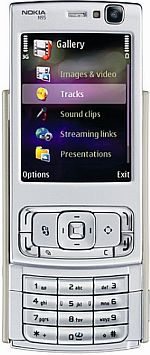
Nokia N95, an all-in-one multimedia computer with a pioneering 2-way slide concept, integrated GPS functionality, a 5 megapixel camera and support for high-speed mobile networks, making it easier to watch and record videos, listen to songs, take high-quality photos, browse the internet, or catch up on email while on the move.
The innovative 2-way slide concept makes it easy to switch between different modes, going from reading maps to watching a video with a simple slide. A numeric keypad slides out from one end of the device while dedicated media keys slide out from the opposite direction, converting the display into full screen landscape mode. With powerful 3D graphics, the Nokia N95 has a stunning user interface that makes it intuitive to find the features and services you want.
With its integrated GPS at your fingertips, finding your way just got easier. The Maps application includes maps for more than 100 countries, enabling users to explore the world, find specific routes or locate services such as restaurants and hotels and covering more than 15 million points of interest. You can also purchase additional features, such as city guides and voice guided navigation.
With the Carl Zeiss optics on the 5 megapixel camera, you can capture print quality photos and DVD-like quality video clips. Photos and video clips can be enjoyed on a compatible television thanks to the device’s TV out feature and support for Universal Plug and Play (UPnP) technology.
Designed for High Speed Downlink Packet Access (HSDPA) networks and with support for WLAN, EDGE and WCDMA networks, the Nokia N95 provides excellent coverage and speeds wherever you may be. In HSDPA networks, browsing the internet, reading email, streaming video and downloading large files can be carried out up to 10 times faster than with 3G.
The Nokia N95 also offers a first class entertainment experience with the combination of a large 2.6” QVGA 16 million color display, impressive 3D graphics, built-in stereo speakers offering 3D Stereo effect, standard 3.5 mm audio jack, support for compatible microSD cards and mini USB for convenient data transfer.
Browsing the internet on the Nokia N95 is a pleasure using the Nokia Web Browser with Mini Map, with new features such as a floating toolbar, password manager and auto complete, as well as web feeds with support for Atom and auto update.
The Nokia N95 is based on the world’s leading S60 software on Symbian OS, enabling you to personalize your device from a wide choice of compatible applications that can be downloaded to the Nokia N95, including games, navigation, entertainment, productivity and creativity. The Nokia N95 comes out of the box ready to create, connect, consume and interact with some of the internet’s most popular services. Use Yahoo! Search to search for and find most anything on the web, scroll though a book with Amazon’s MobiPocket Reader or snap a photo and send it directly to your Flickr site.
The Nokia N95 is expected to start shipping in volumes during the first quarter of 2007 at an estimated unsubsidized retail price of 550 euros (RM2, 591.44).
Sate Kajang
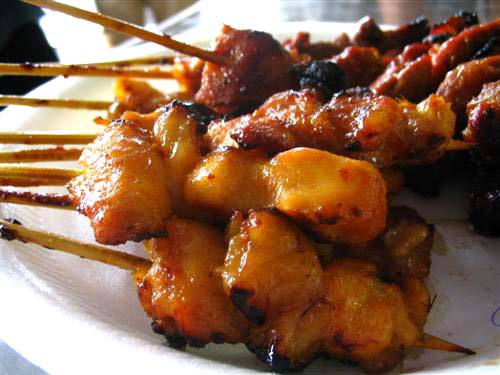 With nine branches of which three are in Kajang, five along the highways (2 in KESAS, 2 in ELITE, and 1 in PLUS) and the other one in Bangi; Satay Kajang Hj. Samuri has achieved the positioning status of the satay market in Malaysia.
The long famous family oriented business has gained the trust and loyalty of satay eaters in town and nationwide. Its variety of meat to choose from, reasonable pricing, fast service, similar taste, efficient operations, are key ingredients to its success.
Today, this family business has given fame to the Kajang town which is otherwise infamous for its nasty traffic congestion. Its success has gone unnoticed by the envied competitors or probably foes to the family when the business was once (or probably few occasion) under 'attack' of bad publicity through nasty e-mails accusing its bad state of hygiene, recipes, and operations.
Cooked by charcoal, served with a plate of nasi impit that came with cucumber (that I learns today that the cucumber purpose is to neutralize the carbon effect on the meat) and dipped into the delicious peanut sauce, it was a one wonderful experience. Although it has variety of menu from chicken, beef, tripe, liver, mutton, to venison, we opted for 15 sticks of chicken and 5 beef. To go with the food, try ordered a glass of soy drink. Very healthy!
So, for the "Untuk Rasa Kajang Yang Sebenar", Haji Samuri and sons give you more than that. They give you the truly sate experience, not just the taste. Happy Eating!

Nobody Fucks in Malaysia! Stop Spreading These Lies!
November 7, 2006 at 5:29 am
The Weekend Mail gave detailed descriptions of favorite sex positions from its survey including spooning, galloping and tea bag positions in three pages of stories that delivered on its front-page promise: You'll be shocked.
I received endless calls and SMS over the articles, Deputy Prime Minister Najib Razak told a ruling-party meeting Sunday. The media going overboard in exploiting sex will only worsen
our social problems, he was quoted as saying by the New Straits Times, a pro-government daily in the same stable as the Mail.
Having to ponder on this very subject that has been left to run riot in the Western civilisation and as a result made waste with something as precious and as honourable as a matter of lovemaking between a husband and a wife but now turned into something cheap and tasteless as animal lust and as a pastime for those who have been enamoured with the liberalisms of the decadent lifestyles rampaging in the West!
powered by performancing firefox
Emas 916 (Krisis Ekonomi Dunia)
Setakat ni harga emas memang dah naik - RM72 per gm! Kalau sesiapa yang ada emas sekarang simpan2 le. Tapi pernah dengar emas kat kedai sekarang pun dah dicampur dengan perak. Tak tau ke betul ke tidak!
Fasal financial planning , org kata duit boleh simpan sampai 2nd & 3rd generation. Aku ragu2 sikit sbb apa yg aku tahu, pakar2 ekonomi dunia meramalkan akan berlaku krisis ekonomi yg teruk yg boleh hancurkan ekonomi kapitalis.
(mereka bukan Tuhan tapi sekurang-kurangnya mereka ada fakta yg kukuh untuk sokong pendapat mereka. Pakar ekonomi Islam yg merujuk kepada Al-Quran dan hadis juga mengesahkan perkara ini pasti akan terjadi)
Bila ekonomi kapitalis collapse, kita tak boleh ambik duit dlm bank. Aku dengar ceramah Mr Matthias Chiang, bekas penasihat politik Tun Dr M. Dia kata ni pasti jadi dlm masa terdekat, 5 thn, tapi perkara ni tak mungkin dicakap dalam perhimpunan agung Umno. Dia ni Christian Katolik yg anti-Zionis. Dia kemukakan bukti berupa kenyataan2 oleh penasihat2
Bush, professor di Havard dan Oxford, org2 kuat IMF, Bank Dunia dan segala sifu zionis. Mereka kata system ekonomi kapitalis akan collapse, keadaan dunia akan jadi lebih teruk daripada krisis ekonomi dunia 1930's. Mamat ni masih close dgn Tun Dr M dan tulis buku tajuk "FUTURE FASTFOWARD".
Aku juga jumpa Umar Vadillo yg terkenal di peringkat dunia kerana mengkaji system kapitalis. Aku pernah wawancara dia di Hotel Prince, KL masa dia dtg nak jumpa Tun Dr M. Dia kata system kapitalis memang dah nak hancur tak lama lagi. Jadi org sekarang beli duit emas yg dikeluarkan oleh syktnya beribupejabat di Dubai dan ada cawangan di Labuan. Dia kata kat aku, org Malaysia yang paling byk simpan duit emas dalam akaun syarikat dia ialah Dr M dan Pak Lah. Maknanya Dr M dan Pak Lah memang well prepared untuk hadapi kehancuran system kapitalis.
Seorang professor ekonomi di UIA, Prof Kamil ada tulis buku pasal masalah duit kertas dan duit dalam bentuk angka ni (duit elektronik). Dia kata duit dalam bentuk angka tu sebenarnya tak wujud pun dlm bank. Duit kertas yg kita simpan bawah bantal atau tabung di rumah pulak akan menyusut dan menyusut dengan teruk sekali nanti. RM1,000 hari ni tak boleh beli apa pun di masa depan.
Terkejut aku baca penerangan dia pasal "money creation" oleh bank. Masalahnya, cerita pasal ni tak keluar pun dalam akhbar arus perdana Malaysia (i.e. berita harian, utusan, star, nst. Akhbar kita hanya memetik sebijik2 laporan CNN, BBC, CNBC, Reauters yang sebenarnya tak betul tu).
Sekarang, ekonomi sudah teruk. Nak tahu teruk atau tidak, jangan tengok CNN, CNBC, Reuters dan sebagainya. Media macam ni tak akan cakap perkara yg benar. Tapi bacalah akhbar2 eksklusif utk geng2 Zionis spt Herald, Weekly Commentator, JerusalemPost etc.
Akhbar ni boleh di access via internet. Media mcm ni dibaca oleh sifu-sifu zionis. Aku kemudian buat research sikit2 pasal money meltdown melalui internet. Lepas tu, aku buat research pasal kekayaan dalam Islam. Aku dapat tahu kekayaan sebenar ialah :-
- tanah (lebih baik tanah tepi sungai atau yg ada air mengalir berdekatannya)
- emas dan perak
- minyak
Sudahnya, kita semua satu dunia, simpan duit kertas yg menurut pakar ekonomi tak akan bernilai di kemudian hari. (RUJUK RENCANA2 VIA INTERNET DI BAWAH TOPIC "THE DEATH OF MONEY).
Yg bernilai ialah emas, minyak dan kemudiannya air bersih. (kerana air akan tercemar dengan teruk di masa depan).
BBC pada tahun 2001 melaporkan bahawa air Sea of Galilee (sebuah tasik sebenarnya) di Palestin sedang surut dan tidak ada tanda2 akan pasang semula. Saintis buat kiraan dalam 50 tahun lagi tak ada setitik air pun di situ. Middle East dan Zionis akan bercakaran kerana air pulak!
Separuh kedua abad ini adalah era "haus kerana tidak ada air" dan "bergelap kerana tiada minyak" (menurut kata penganalisis dunia). Tahun lepas, aku attend seminar nuclear di Hotel Renaissance. Seorang pakar Jepun kata minyak dlm bumi ni hanya bertahan utk 30 tahun saja. Lepas tu, aku tanya Tan Sri Penasihat Sains Negara, "Tan Sri, apa kita nak buat sebab kita tak ada polisi tenaga nuklear?" Dia jawab, "no comment. You kena tanya menteri." Aku call pejabat menteri, menteri lak pergi US. Masa tu aku tengah tulis rencana mengenai polisi tenaga nuclear Malaysia sebagai persediaan hadapi kekurangan minyak.
Aku juga pernah wawancara seorang ahli korporat yg juga kawan baik atau mungkin juga kroni kepada Tun Dr M. Datuk ni mengaku dia tak simpan duit kertas dlm bank, tapi simpan duit emas. Keuntungan yg dia dapat daripada aktiviti perniagaan pulak dibahagi-bahagikan pada org miskin. 'I don't keep money," macam tu lah dia kata kat aku. Lepas aku wawancara dia, dia bagi hadiah kat aku tiga buah buku berkaitan duit kertas dan kaitannya dengan RIBA (FAEDAH BANK). Buku tu menerangkan bahawa RIBA (FAEDAH BANK), duit kertas dan duit elektronik akan dengan sendirinya jadi penyebab kepada kehancuran system ekonomi kapitalis nanti.
Bukti dah ada depan mata iaitu krisis ekonomi Asia 1997 angkara George Soros dulu. Datuk tu kata dia tengah kaji Al-Quran dan dpt tahu apa erti kekayaan yg sebenar. Bila baca surah Yusuf, dia terkejut dan baru tahu kita semua kena simpan MAKANAN, bukannya DUIT KERTAS or DUIT ELEKTRONIK. Mengejutkan juga bila dapat tahu, US sekarang, selain emas dan minyak, sedang MENYIMPAN MAKANAN SEBERAPA BANYAK YG BOLEH! Duit kertas dan duit elektronik pulak dilambakkan ke negara lain di mana tiga per empat daripada dolar sekarang sedang berligar2 di luar US dan sedang menunggu masa untuk collapse. (rujuk rencana2 mengenai krisis dolar Amerika).
Di sini aku petik sikit beberapa kenyataan :-
MD IMF, Rodrigo de Rato, "We believe such a large imbalance of growing indebtedness by the US is a risk not only for the US economy, but for the world economy."
Bob Mc Teer, Presiden Reserve Bank of Dallas, "over time there is only one direction for the dollar to go - lower".
Warrenbuffet, pemain saham terkenal dunia kata : "we view them as TIME BOMBS both for the parties that deal in them and the economic system."
Paul Volker, bekas pengerusi Federal Reserve Board, "we have a 75% chance of a crisis within 5 years".
Aku sekadar nak berkongsi pengetahuan dan mencetuskan pemikiran sahaja.
Apa pun kau fikir pasal maklumat aku ni, terpulang lah. Wallahualam.
p/s.
Di copy & paste dari email yang diterima oleh seseorang.
An easy to use, web-based to-do list

Get organized, stay motivated, and be more productive.
Folders - You can organize your tasks into different folders or projects. For example, you could have a folder for work related tasks, one for home projects and another for your hobby. You can have unlimited tasks and unlimited folders.
Due-dates - Set a due-date for a task and we'll remind you when the deadline is approaching. You can also have tasks that repeat once you finish them.
Priority - Some tasks are more important than others. With priorities, you can better sort and organize your tasks.
Time Tracking - You can keep track of estimated and actual time spent on any project. Estimated time can help you prioritize better and find small tasks to fill in little chunks of free time. Actual time can be used for billing purposes or in making yourself more efficient.
Notes - You can attach lengthy notes to any task, so you can keep track of important information.
Tags - Add tags or keywords to help describe the task. This can be used to keep track of the state or progress of a task. Or use it for your own organization scheme.
Calendar - The calendar will give you a visual representation of when your tasks are due.
Collaboration - You can easily share your to-do lists with coworkers, friends, family or anyone else. You have complete control over who has permission to read or modify your to-do list.
Import / Export - It's your data, so you should be able to take it with you. You can import and export your tasks in a variety of formats, including RSS, XML and iCal.
Customization - Easily hide fields that you don't use or disable functionality that you don't like.
Subscribe to:
Posts (Atom)